MoveWell Med Community Physiotherapy and Mobile Rehab Services in British Columbia
Canada - April 23, 2026 / Movewell Med /
For Immediate Release
MoveWell Med Brings Innovative Physiotherapy Care to Communities in BC
LANGLEY, British Columbia, April 23, 2026 - MoveWell Med, a physiotherapy and rehabilitation provider in British Columbia, has reported ongoing development of its community-based care model aimed at expanding access to physiotherapy outside traditional clinics. It operates mobile physiotherapy services, in-home rehabilitation, and workplace treatment options for patients facing barriers such as mobility limitations, time constraints, and distance.
The model reflects growing demand for rehabilitation care in community settings, where services are delivered in patients’ everyday environments to support continuity of care. A spokesperson for MoveWell Med stated that community-based delivery allows practitioners to assess functional movement in real-world conditions and inform rehabilitation planning. The development aligns with broader healthcare trends in British Columbia toward decentralized and outpatient rehabilitation services.
British Columbia has seen increasing emphasis on community-level rehabilitation services as part of broader efforts to reduce strain on clinical infrastructure and improve patient access to timely care. MoveWell Med continues to operate across multiple communities in the province, integrating physiotherapy services into residential, workplace, and community environments to support functional recovery and mobility outcomes. This approach is part of a continuing shift toward more flexible rehabilitation delivery models that prioritize accessibility and patient-centered care within the provincial healthcare landscape.

Rising Demand for Community-Based Physiotherapy Services in British Columbia
British Columbia has experienced a steady increase in demand for physiotherapy and rehabilitation services, driven by an aging population, higher rates of musculoskeletal conditions, and growing awareness of preventive care. Health system pressures have also contributed to longer wait times in traditional clinical settings, prompting interest in alternative service delivery models.
Within this context, rehabilitation providers such as MoveWell Med are operating in a healthcare environment where accessibility has become a central concern. Many patients face logistical barriers including transportation challenges, limited mobility, and scheduling conflicts that can delay or interrupt treatment continuity.
Community-based physiotherapy has therefore gained attention as a practical response to these issues. By shifting aspects of care into residential and community environments, practitioners are able to reach patients who might otherwise experience gaps in treatment. This trend reflects a broader shift in provincial healthcare planning toward outpatient and decentralized care models.
At the same time, healthcare policymakers and providers are increasingly recognizing the importance of early intervention in reducing long-term rehabilitation costs. As a result, physiotherapy services delivered outside of traditional clinics are being more widely integrated into regional care strategies across British Columbia.
Shift Toward Decentralized Rehabilitation Delivery Models
Rehabilitation services in British Columbia are gradually evolving from centralized clinic-based systems toward more distributed and flexible models of care. This transition is being influenced by increasing patient demand for convenience, as well as broader healthcare system priorities focused on accessibility and efficiency.
In this changing environment, providers are expanding service delivery beyond fixed clinical locations. The approach emphasizes bringing physiotherapy support into environments where patients live and work, rather than requiring repeated travel to healthcare facilities. This model is particularly relevant in regions with dispersed populations and urban congestion. Organizations such as MoveWell Med are part of this broader shift, contributing to the growing adoption of decentralized rehabilitation frameworks. These frameworks aim to reduce barriers associated with traditional care pathways while maintaining clinical consistency and treatment standards.
The move toward decentralized care is also aligned with healthcare system objectives related to resource optimization. By distributing services across community settings, providers can help reduce pressure on hospitals and outpatient clinics, allowing them to focus on more complex cases requiring specialized intervention. This evolving structure reflects a significant transformation in how rehabilitation services are conceptualized and delivered across the province.
Expansion of Mobile Physiotherapy Across Residential Environments
Mobile physiotherapy has emerged as a key component of modern rehabilitation delivery in British Columbia, offering patients access to treatment within their own homes. This approach eliminates the need for travel and allows clinicians to assess patients in real-world environments where daily movement patterns occur.
Residential-based care is particularly beneficial for individuals recovering from surgery, managing chronic pain, or experiencing mobility limitations. Treatment in a home setting also enables practitioners to better understand environmental factors that may influence recovery outcomes, such as stairs, flooring, and available mobility space. As part of this broader trend, MoveWell Med has incorporated mobile physiotherapy into its service structure, contributing to the expansion of home-based rehabilitation across the province. The model reflects a growing recognition that accessibility plays a critical role in treatment adherence and long-term recovery success.
In addition to improving convenience, mobile physiotherapy supports continuity of care by reducing missed appointments and minimizing disruptions in treatment schedules. This consistency is considered an important factor in rehabilitation progress, particularly for patients requiring ongoing therapeutic intervention over extended periods. The continued growth of residential physiotherapy services highlights a broader shift toward patient-centered healthcare delivery in British Columbia.

Integration of Workplace Rehabilitation and Injury Prevention Programs
Workplace rehabilitation programs have become an increasingly important component of physiotherapy services in British Columbia, particularly as employers seek to reduce workplace injuries and improve employee wellness outcomes. These programs often focus on early intervention, ergonomic assessment, and functional movement support.
By delivering physiotherapy services directly within workplace environments, practitioners are able to assess job-specific physical demands and develop targeted strategies to reduce strain-related injuries. This approach is especially relevant in industries with repetitive motion tasks, prolonged sitting, or physically demanding roles. Rehabilitation providers such as MoveWell Med are contributing to the expansion of these workplace-focused services, reflecting a broader shift toward preventive care in occupational health. The integration of physiotherapy into workplace settings supports both injury recovery and risk reduction.
In addition to individual treatment, workplace programs often include education on posture, movement habits, and injury prevention techniques. These initiatives aim to reduce long-term health risks while improving overall workforce productivity and wellbeing. The growing adoption of workplace rehabilitation reflects an increasing recognition of the connection between occupational environments and musculoskeletal health outcomes.
Patient-Centered Rehabilitation and Functional Recovery Planning
Modern physiotherapy approaches in British Columbia are increasingly focused on patient-centered rehabilitation, where treatment plans are designed around individual needs, lifestyle factors, and functional goals. This approach prioritizes long-term recovery and independence rather than short-term symptom management alone.
In practice, patient-centered care involves comprehensive assessment of movement patterns, physical limitations, and daily activity requirements. Treatment strategies are then tailored to support gradual improvement in strength, mobility, and functional capacity. Within this framework, providers such as MoveWell Med contribute to a broader healthcare shift that emphasizes personalized rehabilitation planning. This approach aligns with contemporary best practices in physiotherapy, which increasingly prioritize adaptive and goal-oriented care models.
Functional recovery planning also incorporates education on movement mechanics and self-management strategies. These components are designed to support patients beyond clinical sessions, enabling them to actively participate in their own recovery process. This shift toward individualized rehabilitation reflects a broader transformation in healthcare delivery, where patient outcomes are increasingly measured by long-term functionality and quality of life rather than immediate clinical intervention alone.
Evolving Role of Technology in Rehabilitation Coordination and Care Delivery
The integration of digital tools into physiotherapy services has become an emerging trend in British Columbia’s healthcare landscape. Technology is increasingly being used to support appointment coordination, patient monitoring, and communication between practitioners and clients.
Digital platforms enable more efficient scheduling and follow-up processes, reducing administrative barriers and improving continuity of care. In some cases, remote consultations and virtual assessments are also incorporated into rehabilitation plans, particularly for follow-up sessions or progress evaluations. These developments are part of a broader modernization of physiotherapy services, where technology is used to complement in-person treatment rather than replace it. This hybrid approach allows providers to maintain clinical oversight while improving accessibility for patients.
Organizations such as MoveWell Med are operating within this evolving environment, where digital coordination tools are increasingly becoming standard components of service delivery models. The continued adoption of technology in rehabilitation reflects broader healthcare system trends toward efficiency, data-informed care, and improved patient engagement across British Columbia.
About MoveWell Med
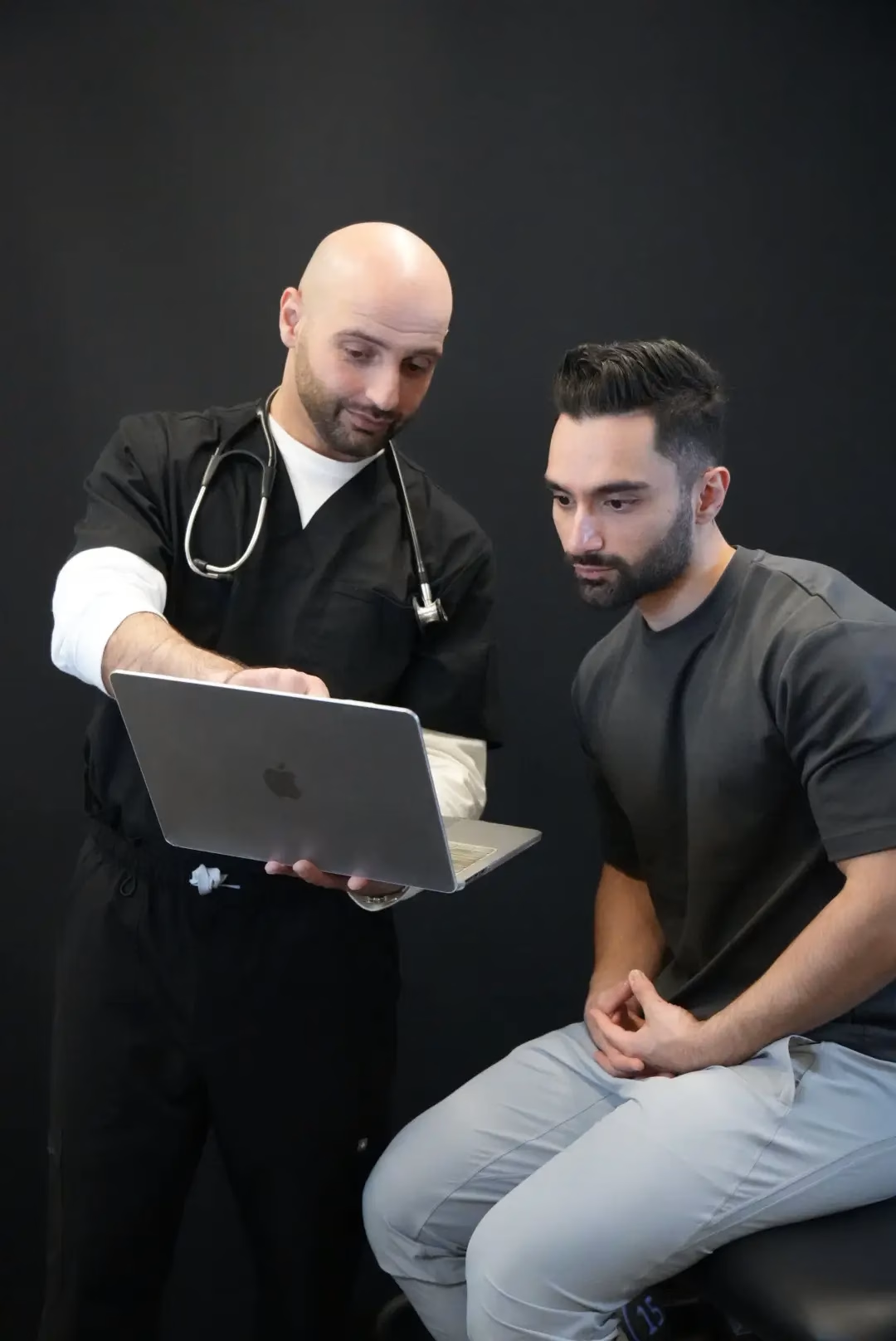
MoveWell Med is a healthcare organization based in British Columbia that focuses on delivering rehabilitation, mobility, and wellness services through accessible and community-oriented care models. The company operates as the parent organization behind MoveWell Clinic and MobileTherapy.ca, supporting a range of physiotherapy and rehabilitation solutions delivered in-home, in workplaces, and through upcoming clinical locations.
Its service model is centered on improving access to care by integrating physiotherapy into everyday environments, allowing patients to receive treatment in settings that best suit their needs. The organization’s approach emphasizes functional recovery, movement education, and long-term mobility support across diverse patient groups.
MoveWell Med is guided by a mission to support improved physical function and overall well-being through structured rehabilitation programs and patient-focused care delivery.
Media Contact
MoveWell Med
British Columbia, Canada
Phone: 604-698-6683
Email: info@movewellmed.com


Original Source: https://movewellmed.com/media-room/#/media-room
